

Modern implant dentistry is no longer simply about replacing a missing tooth. It is a discipline at the intersection of biology, engineering, prosthodontics, and aesthetics.
As patients become increasingly aware of the importance of oral health and the need for appropriate replacement of missing teeth, dental implants have gained an increasingly important place in both scientific research and contemporary dental treatment.
From my perspective, however, successful implant treatment does not begin at the moment a fixture is placed into the bone. It begins much earlier—with accurate diagnosis, comprehensive treatment planning, and the appropriate selection of an implant system.
Implant System Selection: A Decision Beyond the Brand Name
Throughout my years of professional practice, I have always sought to select the materials and systems used in my patients’ treatment based on a combination of scientific and clinical considerations, including manufacturing quality, connection precision, fixture design, availability of prosthetic components, and the possibility of long-term support after treatment.
Considering the particular circumstances of our country and based on my professional experience, among the implant systems available in Iran, Swiss-manufactured implant systems, including IML, have attracted my attention.
For me, one important consideration—alongside the quality of the implant system—is reliable access to prosthetic components and after-sales support. Implant treatment is not a short-term procedure, and patients may require specific prosthetic components or related services many years after the initial treatment.
Connection Precision: A Small Detail with Major Importance
Within an implant system, the connection between the fixture and the abutment is one of the most delicate and, at the same time, important aspects of treatment.
Fixtures and abutments are manufactured according to the specific engineering design and geometric characteristics of each implant system. Therefore, whenever possible, the use of the original abutment designed to be compatible with the corresponding fixture can help maintain the precision and harmony of the implant–prosthetic components.
This precision is not merely an engineering consideration; it also has biological relevance. The more accurately the components fit together, the more predictable the control of the microbial environment at the connection interface and the long-term stability of the assembly may be.
Even when the patient’s prosthetic requirements make the use of angled abutments, customized components, or techniques such as casting necessary, the accuracy of fabrication, adaptation of the surfaces, and smoothness of the connection interface become particularly important.
I Do Not Place a Fixture Only for Today; I Plan It for the Years Ahead
One of the principles I consider particularly important in implant treatment planning is to visualize the final prosthesis before placing the fixture.
Simply put, an implant is not merely a foundation within the bone. It is a foundation upon which a tooth and a prosthetic restoration are expected to function for many years.
I often think of this process in terms of architecture. Just as an architect considers the final form, function, and aesthetics of a building before construction begins, implant dentistry should also consider the final prosthesis, tooth position, bone and soft-tissue conditions, and functional load distribution when determining the position and angulation of the fixture.
For this reason, whenever clinically feasible, the fixture should be positioned in a way that facilitates the future use of an appropriate abutment and, whenever possible, the original components of the same implant system.
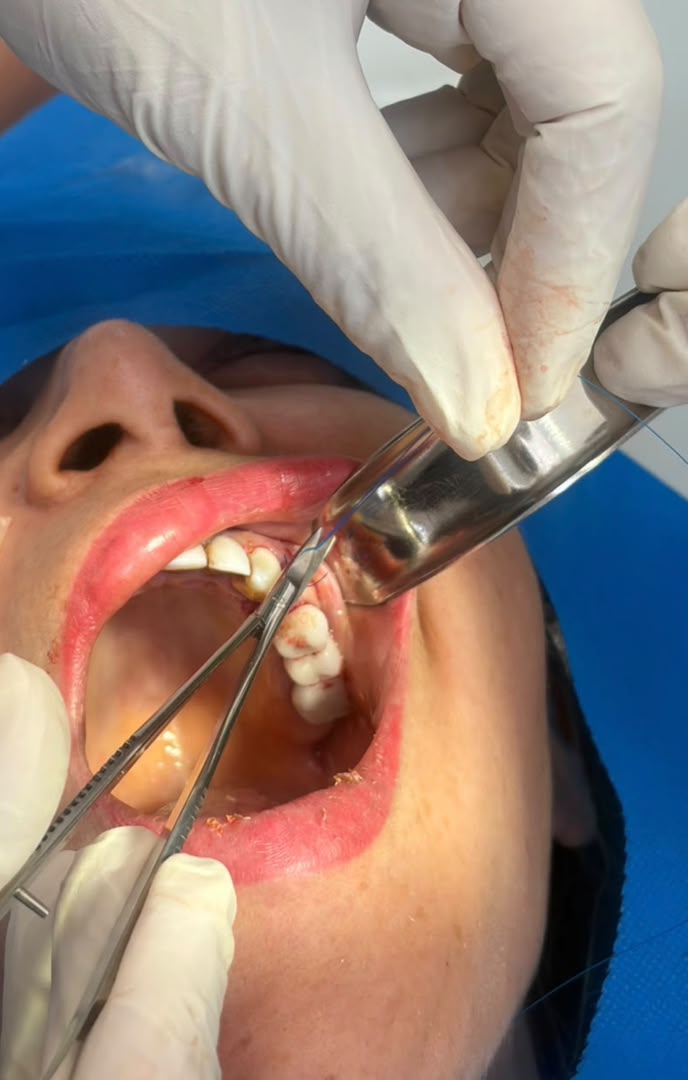
My Perspective on Implant Dentistry
For me, implant dentistry is not simply about placing a fixture into bone.
Successful treatment is the result of bringing together a series of precise decisions:
Accurate diagnosis
Thoughtful treatment planning
Appropriate implant-system selection
Precise fixture placement
Respect for the surrounding tissues
Anticipation of the final prosthesis
And long-term follow-up
Ultimately, success is not defined solely by whether an implant has been placed in an appropriate position on the day of surgery. From the very beginning, we should also consider one essential question:
How will this implant become a harmonious, aesthetic, stable, and functional part of the patient’s dentition—not only today, but for many years to come?
This is the perspective I bring to implant treatment:
Looking beyond today, toward the years ahead.